When Efficiency Becomes a Paradox
In the AI era, efficiency often comes at the cost of trust. This essay explores how companies can share productivity gains without sacrificing their people.
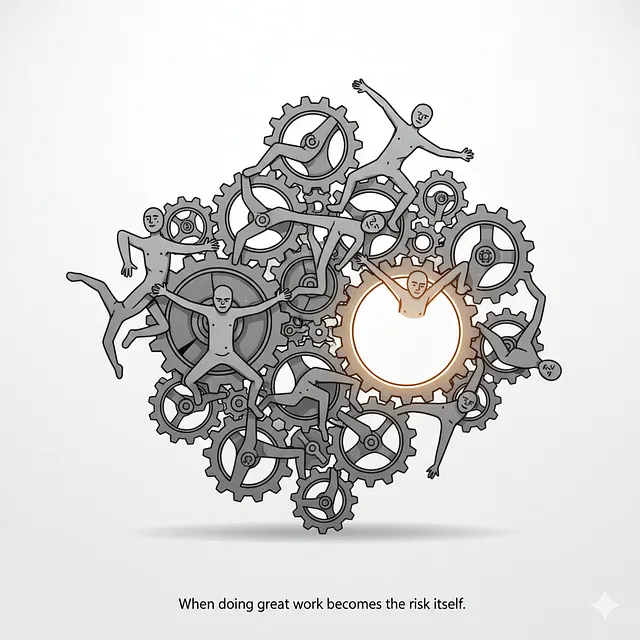
Most companies say they want efficiency. Few are ready for what it actually means.
I recently finished reading The Goal by Eli Goldratt, which reads more like a story than most typical business books. You are transported into the world of a factory manager racing to save his plant by finding and eliminating bottlenecks.
It’s brilliant in its simplicity, but the part that actually stuck me the most wasn’t the story itself. It was Goldratt’s personal essay at the end, a quiet reflection that exposed a deeper truth.
Real efficiency, he says, isn’t driven by machines or software. It’s driven by people, employees who invest their time and energy to to fix what’s broken, challenging how things are done.
And yet, the irony is painful. Once these people succeed, once they help the company reduce costs and improve systems, they often become “redundant.”
The very people who made the system better are the ones who pay the price for its improvement. That’s the paradox at the heart of modern efficiency.
Now, as AI becomes embedded in every workflow, that paradox will get sharper. Every “efficiency gain” or “automation initiative” carries a hidden question: do great work and risk automating yourself out of a job, or hold back and risk being seen as resistant to change?
That’s not a performance issue. It’s a trust issue.
Efficiency, in theory, should create freedom, more capacity, better systems, less chaos. But in practice, it often creates anxiety, because by now everyone has learnt that efficiency usually leads to layoffs, not better quality work.
When you look closer, efficiency was never supposed to be about extraction. It was meant to remove friction, freeing up our energy to work on higher-value work.
But that only works if everyone trusts that the gains will be shared. Without that trust, employees protect their turf, innovation slows, and fear replaces initiative.
The real challenge nowadays isn’t making work faster. It’s making improvement feel safe.
Only when people are confident that efficiency won’t cost them their jobs, they’ll stop hiding process flaws and start fixing them. Till that trust is never developed, efficiency drives will always seem coercive, not a collective effort.
We don’t need to stop pursuing efficiency. We just need to rethink how we share its rewards.
Until we do, resistance to change will keep showing up disguised as technical barriers or alignment issues. But underneath, it’s always the same thing — fear of being replaced by the progress you helped create.
So the real question is this: how do we build systems of trust where efficiency lifts everyone, not just the bottom line?