When Growth Looks Too Good: The Math Behind the AI Infrastructure Bet
Why the AI infrastructure boom is fundamentally different from past bubbles — and why that makes it riskier, not safer
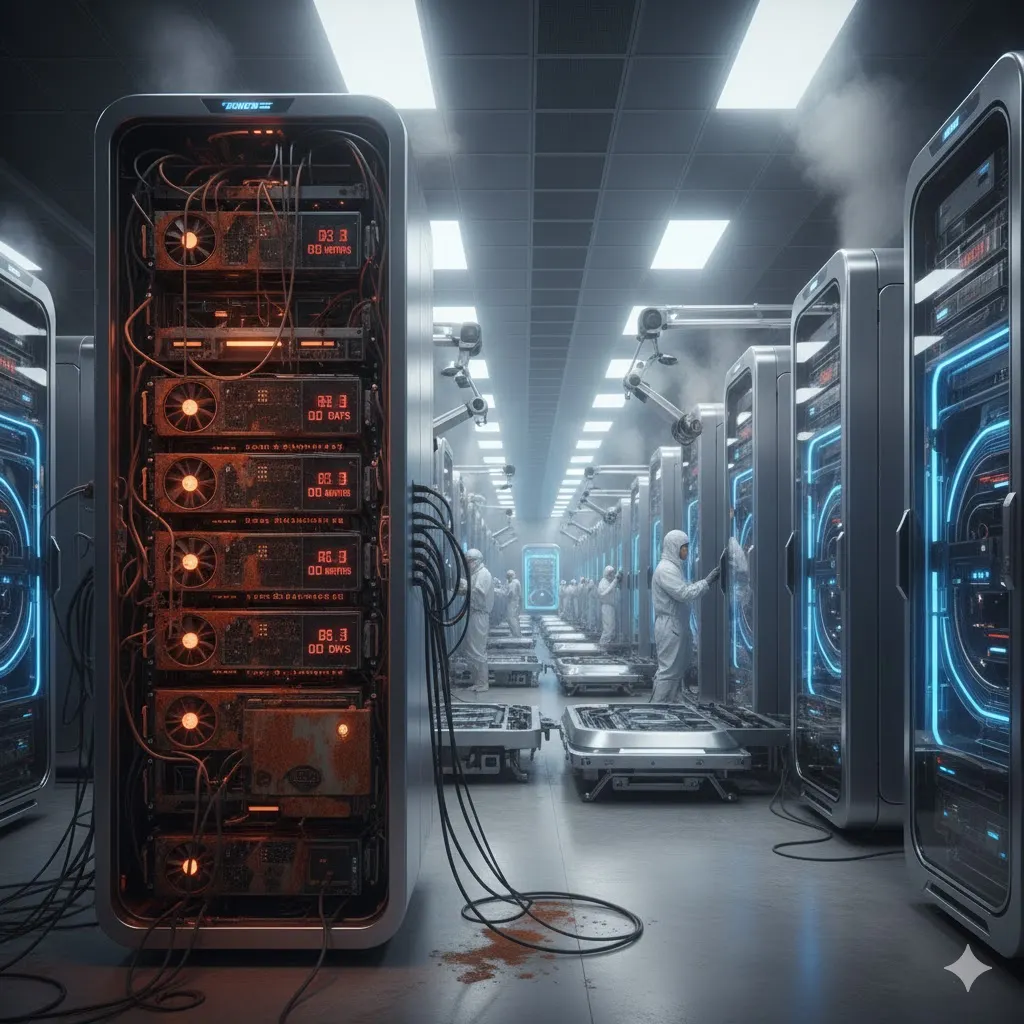
My tech portfolio is up 300% in 18 months. Most people would celebrate. I’m re balancing instead. Here’s why the numbers terrify me more than they excite me.
The False Comfort of History
Everyone makes the same comparison when discussing AI’s $400 billion annual investment spree: “Look at the dot-com bubble. Yes, it was wasteful, but it built fiber optic infrastructure that lasted 20+ years. That fiber eventually powered the internet. So the overbuild served a purpose.”
It’s a seductive argument. It lets you sleep at night.
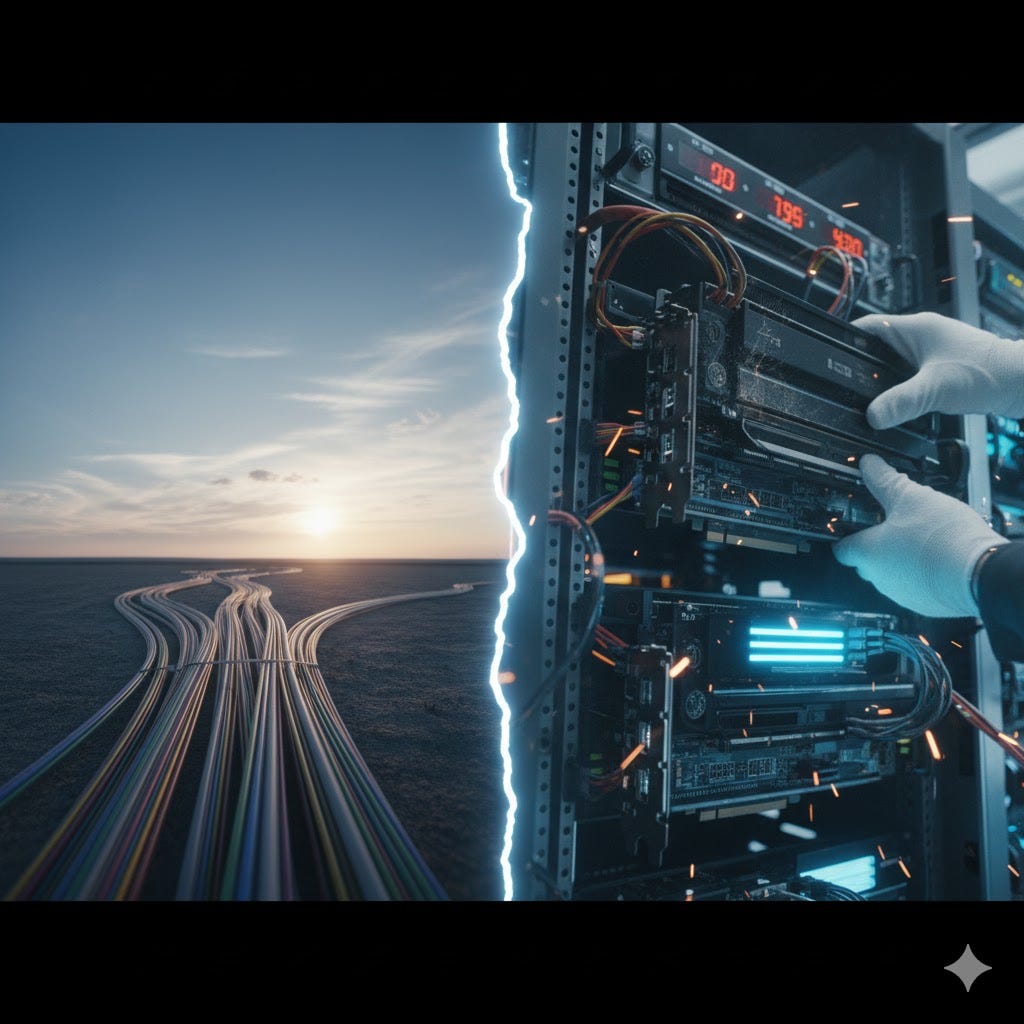
But there’s a critical difference, fiber optics cables can last for decades. They sat unused for years after the bubble burst, but they were durable. Eventually, when demand caught up, that infrastructure was ready. The math could wait.
AI servers? They last 3 to 4 years. Maybe 5 if you’re generous with accounting.
The Depreciation Disconnect
Cloud providers depreciate AI servers over 5 to 7 years. It spreads the massive upfront cost across a longer timeline, which makes the math look better on quarterly earnings reports.
However, according to researchers, GPUs are “accounted for in a five-year depreciation, but actually are unusable after about 36 months.”
NVIDIA accelerates this timeline further. The company has moved to a “very aggressive design cycle of roughly a year between major releases,” with each new generation bringing significant performance leaps.
The result? A ticking time bomb in the balance sheet.
AWS recently completed a “useful life study” and didn’t like the results. Starting January 2025, AI-focused infrastructure will be depreciated over 5 years instead of 6 — the first major reversal of the cloud depreciation trend.
This is code for: “The technology is becoming obsolete faster than we thought.”
If every major cloud provider shortens depreciation schedules from 5–7 years to 3 years, which what needs to be really done, annual depreciation expenses will nearly double. Profitability doesn’t disappear immediately. It erodes quietly until it vanishes.
The Replacement Treadmill
Unlike fiber optics, AI infrastructure requires perpetual capital cycles, not a one-time buildout as we witnessed in such similar bubbles.
My iPhone 12 felt lightning-fast in 2020 but by 2024, I had to upgrade to an new one. That’s technology obsolescence at play.
Now imagine being a company that paid billions for GPUs in 2024, and discovering in 2027 that competitors with newer chips are stealing your customers. You can’t afford to keep running old hardware.
The AI business model requires a a constant upgrade cycle. Every 3 years, you need fresh capital just to stay competitive. Every 3 years, the previous generation of hardware becomes a liability rather than an asset.
So the capital spending doesn’t stop. It renews. This is fundamentally different from fiber optics, which you could invest once and find use when the real market demand arrives.
The Revenue Reality Check
In 2025, hyperscalers are on pace for $400–500 billion in AI infrastructure spend. That’s the investment side.
Currently Microsoft, Meta, Tesla, Amazon, and Google have invested about $560 billion in AI infrastructure over the last two years, but brought in just $35 billion in AI-related revenue combined.
That’s a 16:1 investment-to-revenue ratio.
OpenAI collected $4.3 billion in revenue during the first half of 2025 while posting a net loss of $13.5 billion. Yes, OpenAI is growing. Yes, the company is presently booking $13 billion in annual recurring revenue.
But that’s one company, and it’s burning capital at a rate that would bankrupt most businesses.
The revenue is real. The growth is real. But it’s not scaling fast enough to justify the capital deployment. Not even close.
The Three Questions You Need to Ask
Before you make any bet on AI — whether it’s a startup, an investment, or a major strategic pivot, ask yourself these three things:
- The Replacement Math: If you have to buy new servers every 3 years instead of 20, can one generation of revenue fund the next? Most companies can’t. Most won’t admit it.
- The Revenue Acceleration Test: What’s the credible path from $35 billion in annual AI revenue to the $300+ billion needed to justify current capex? If you can’t draw a realistic line, you’re betting on hope, not math.
- The Margin Question: Are we looking at accounting profit or economic profit? If depreciation schedules shorten, does profitability evaporate? This is where the real damage happens.
Most of us including myself skip these questions. They see the growth rate and assume the math works. They see fiber optics and assume infrastructure always eventually pays for itself.
But this isn’t fiber. This is a treadmill. And treadmills only work if you can keep running fast enough.
Everything that’s rosy isn’t 100% false. AI will transform the economy. The infrastructure investments are real. The growth is real.
But that’s exactly when you need to dig deeper.
When your portfolio is up 300%, that’s not a signal to celebrate. That’s a signal to ask harder questions. When everyone’s bullish, that’s when clarity matters most. When valuations are soaring, that’s when the math becomes unforgiving.
My portfolio benefited from this cycle. And that benefit is precisely why I’m considering rebalancing. The gains are real. The risk is real too.
Sources & References
- Gaurav Ahuja (September 2025): “. Is AI Forcing a Midlife Crisis on Cloud Hardware?” IEEE ComSoc Technology Blog
- Peter McCoy (September 2025): “The AI Capex Spree: $500B Spent, $30B Earned, and the Real Winners Nobody’s Watching.”
- Fortune (September 2025): “Everyone’s wondering if, and when, the AI bubble will pop. Here’s what went down 25 years ago that ultimately burst the dot-com boom.”
- The Register (October 2025): “ChatGPT: so popular, hardly anyone will pay for it.”
- CNBC (October 2025): “OpenAI’s spending bonanza has Wall Street focused on capex in Big Tech earnings reports.”
- Tom’s Hardware (October 2024): “Datacenter GPU service life can be surprisingly short — only one to three years is expected according to unnamed Google architect.”